
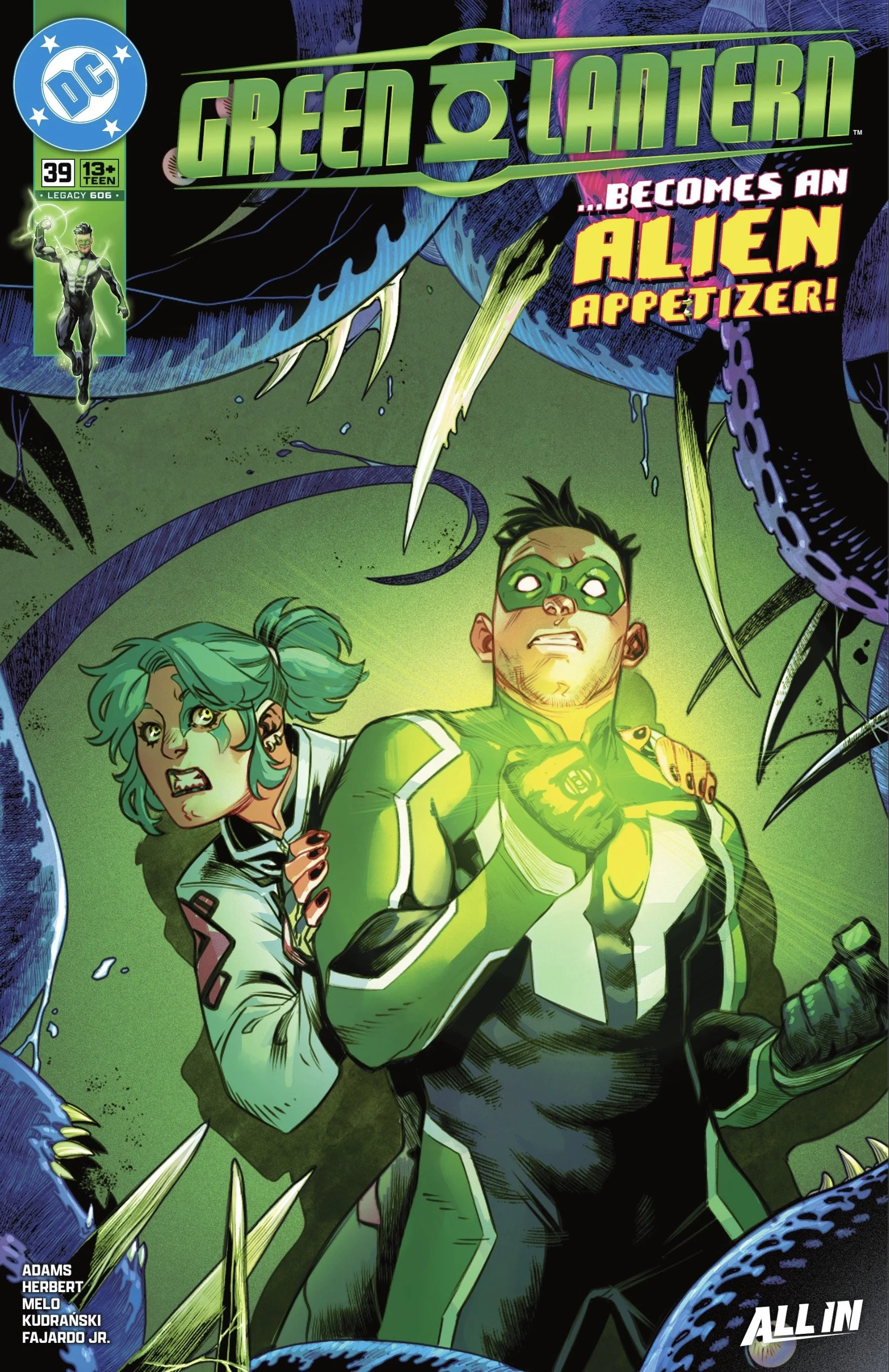
Green Lantern #39
"Food Fight" Part 2
Writer: Jeremy Adams
Artist: Adriana Melo, Szymon Kudranski, and Jack Herbert
Colorist: Romulo Fajardo Jr.
Cover Artist: Ig Guarra and Alex Guimaraes
Publisher: DC Comics
Holy cow, did something of note happen in this issue? My boy Kyle Rayner actually did something cool?
It’s about time.
Hurt
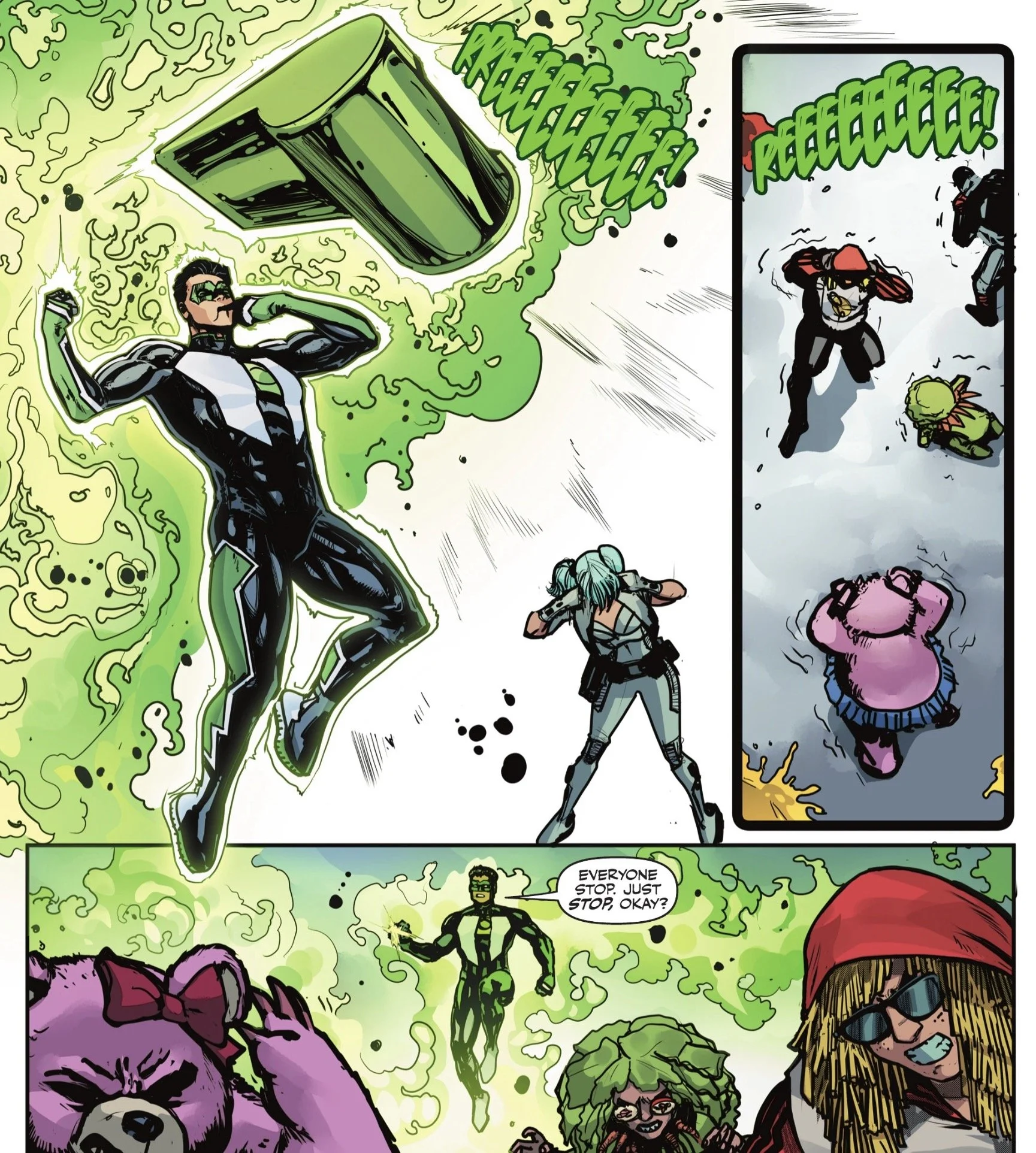
The giant food-themed battle continues until Kyle has finally had enough and stuns everyone present all at once. It’s then revealed that an escaped Oan prisoner is behind the Big Belly Burger murders (duh). Then people turn into food zombies?
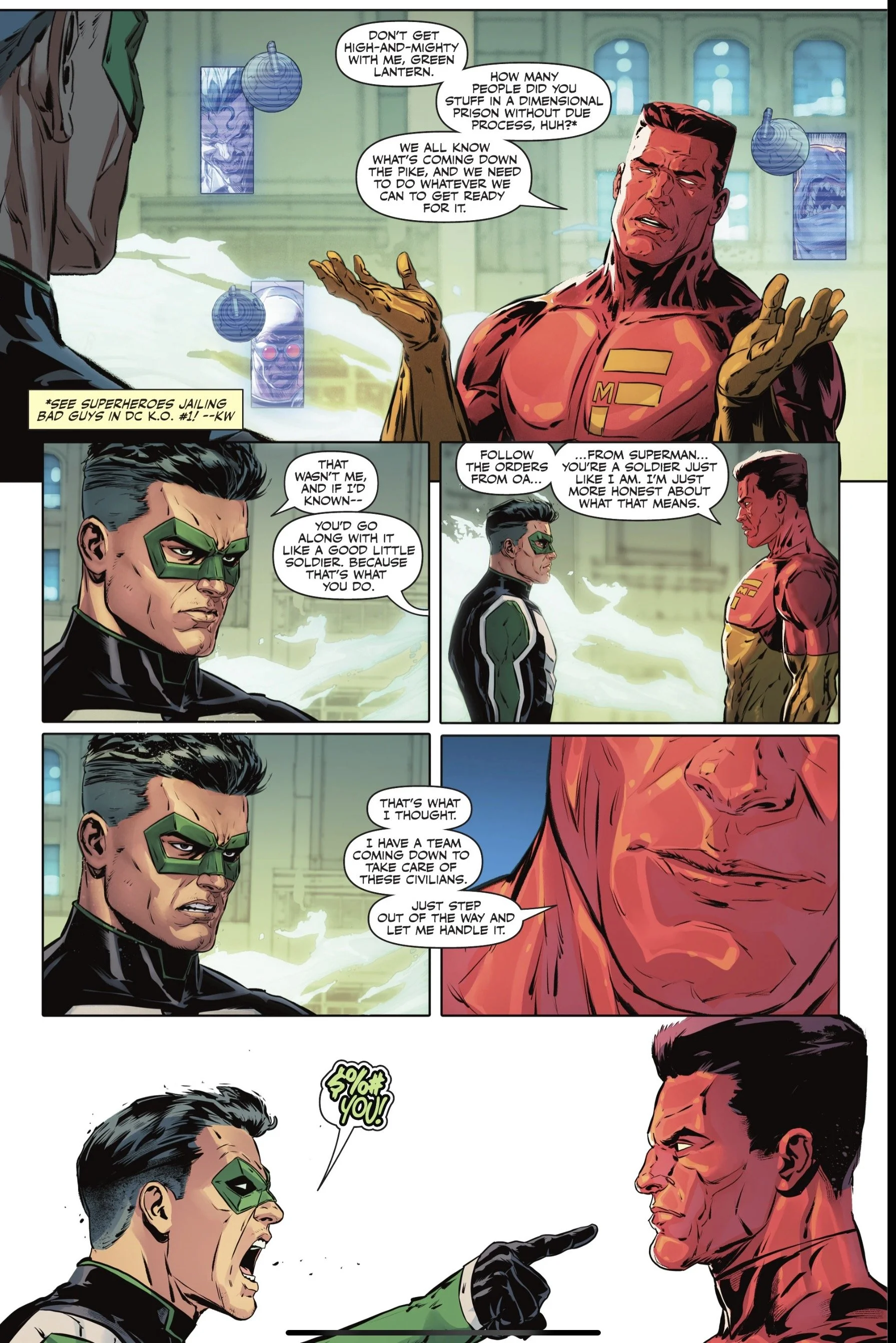
Thankfully, Major Force shows up to say this has all been under the watchful eye of the U.S. government. And that’s when Kyle has had enough…
Oh, and based on the epilogue, I think the Kyle Rayner plots and the Hal Jordan plots are going to intersect soon...
The Unforgiven
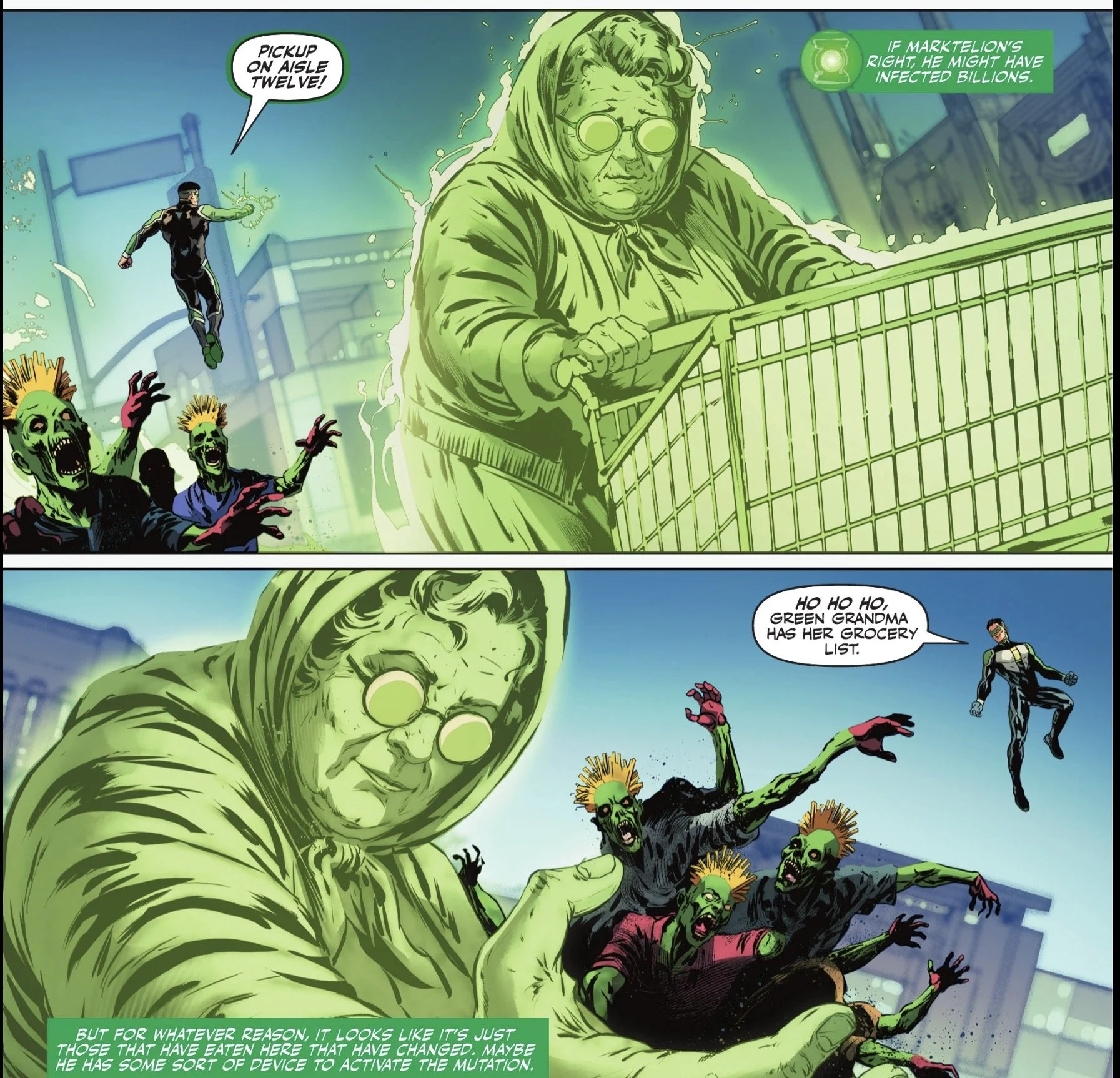
And so the "Food Fight" story arc mercifully draws to a close. I apologize if you were digging it, but I most certainly was not. It was strange and silly, and not even in a fun way. I do give them credit; at least it was surprising who the alien was disguised as—I was sure it was one of the murderous mascots.
I lost count of the number of escaped aliens that Kyle was supposed to be looking for, but I believe this was the last one. So now that arc can also draw to a close, with the vast majority of them falling right into Kyle’s lap through no real effort of his own.
Thankfully, once the food-based part of the issue gets out of the way, we come to the really good stuff: Kyle versus Major Force, this time with no one to break them up. This has been a long time coming—and thankfully, it doesn’t disappoint.
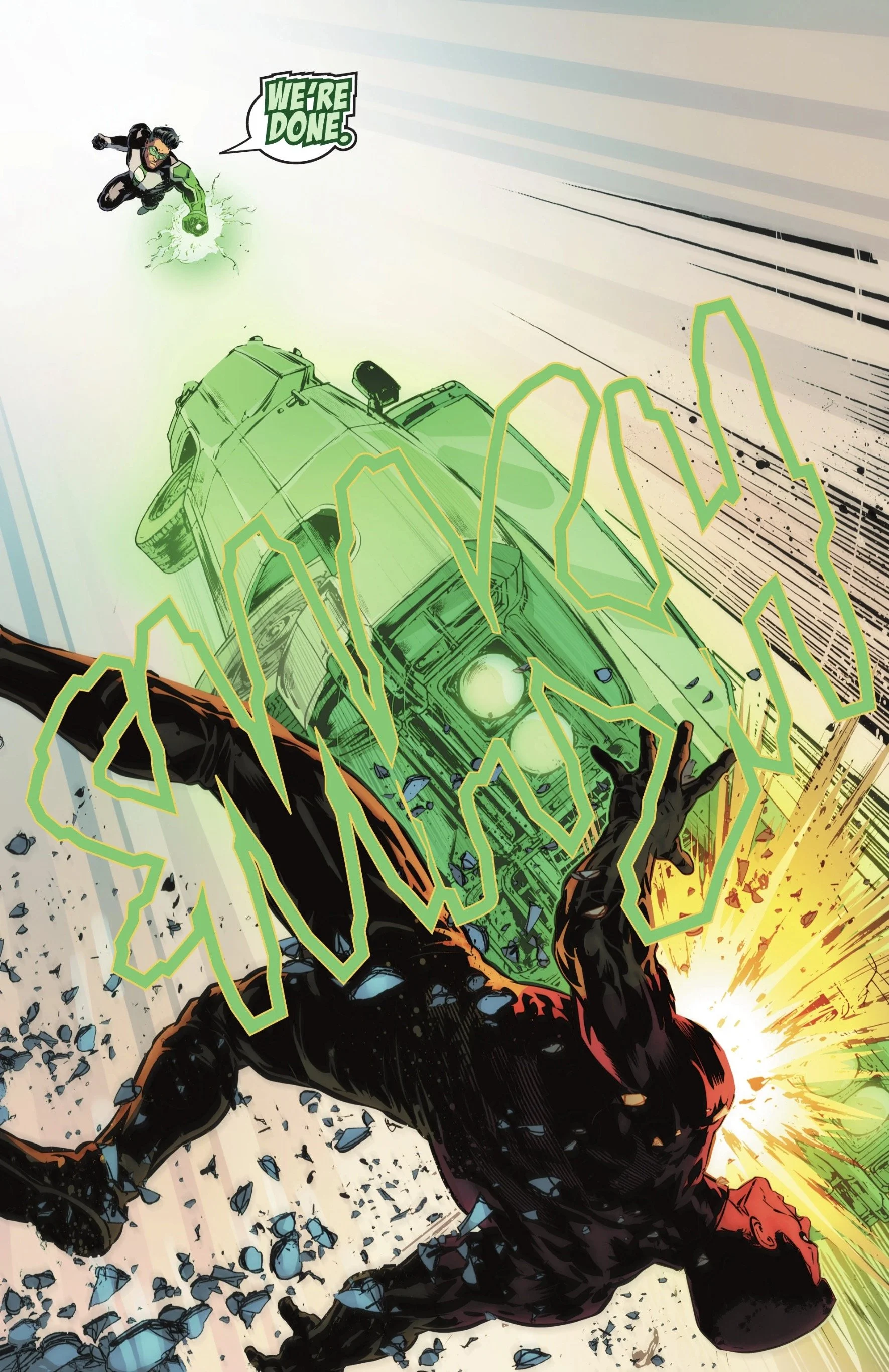
There's a moment here. Major Force is giving Kyle the "we have to be the hard men who make the hard choices" speech—you know, "it's for the greater good" and all that—when Kyle just snaps and hits MF with a truck. Well, a ring construct of a truck, but still. It's a truck.
Kyle then proceeds to unload years of pent-up frustration, grief, and rage into the Major. It's still not enough to put the man down, and he gives back as good as he got. Soon Kyle is the one lying on the ground, but he still won't stay there.
So he goes White Lantern.
I came back to Green Lantern when Kyle took over the book, because he's always been my GL. So I have no clue about much of what went on prior to that point. Hal's visions? I'm clueless. The state of the Corps overall? I got nothin. Why are the Guardians even bigger jerks than usual? Beats me.
That also means I have no idea how, or why, Kyle can apparently turn into the White Lantern for a limited amount of time. But damn if it doesn't look cool when he does.
I've complained a lot throughout this run that it feels like the creators have regressed Kyle too much. That he's too childish and irresponsible, especially for someone who's been through everything that he has. I still think that. But, that doesn't mean there aren't moments where they nail it. The White Lantern moment is one of those.
It would have been so easy for Kyle to just end MF there. He even says so. For what the man did to Alex DeWitt all those years ago, for everything he's done to others since then... for everything that Kyle himself has been through and had to endure... no one would have blamed him. Hell, some people would have congratulated him and asked why it took him so long. But he didn't go there. He rose above his anger, above his regrets, above his grief. He chose the Light of Life—he chose light itself.
And that is why he's my Green Lantern.
Fight the Power
Jeremy Adams clearly understands Kyle's character. That's why it bugs me so much when he doesn't write him actually in character. But with this issue, he really does nail it. I'm still not a fan of the first half of the issue; I thought the "Food Fight" storyline was really silly, but since it gives us the Major Force scenes, I'm willing to give it a pass. I just hope that maybe things can stay a little more serious now.
This Green Lantern series has had a real issue with artists—not only does it feel like they change almost every month, but we get several in the same issue. This time around, we get three. The best thing I can say is that this group's styles must mesh together pretty well, because other than a couple of pages, I can't tell where switches would have happened. We have Adriana Melo, Szymon Kudranski, and Jack Herbert all working together here. The action is well-rendered, and the ring constructs are relatively creative. Most importantly, the fight with Major Force feels brutal, as it should. I'm not crazy about how Kyle's mask is rendered this issue, however—the eye holes are really big, and I'm actually not used to seeing his eyes; they're usually whited out. So it's a little unnerving the way it appears here.
Colorist Romulo Fajardo Jr. has been the glue that holds this title together through the multiple artists, and this issue is no exception. His palette seems to shift with turns in the story, so things like the "food zombies" are done in a much darker style, while Kyle's triumphant moment is a bit brighter. There's obviously a lot of power effects and ring constructs flying around here, and he does a great job making those stand out, as always.
Release
Green Lantern #39 is probably the strongest issue of the title since this Kyle Rayner run started, even if the "Food Fight" story is nothing special. It gives Kyle the most to do in terms of characterization and showing maturity that we've seen in some time, and it allows him to finally get his hands on Major Force without any outside interference. As someone who's been a fan of Kyle from the very beginning, that confrontation was very cathartic—I'm excited to see where my favorite GL goes next, now that he's free from the shackles of his past.